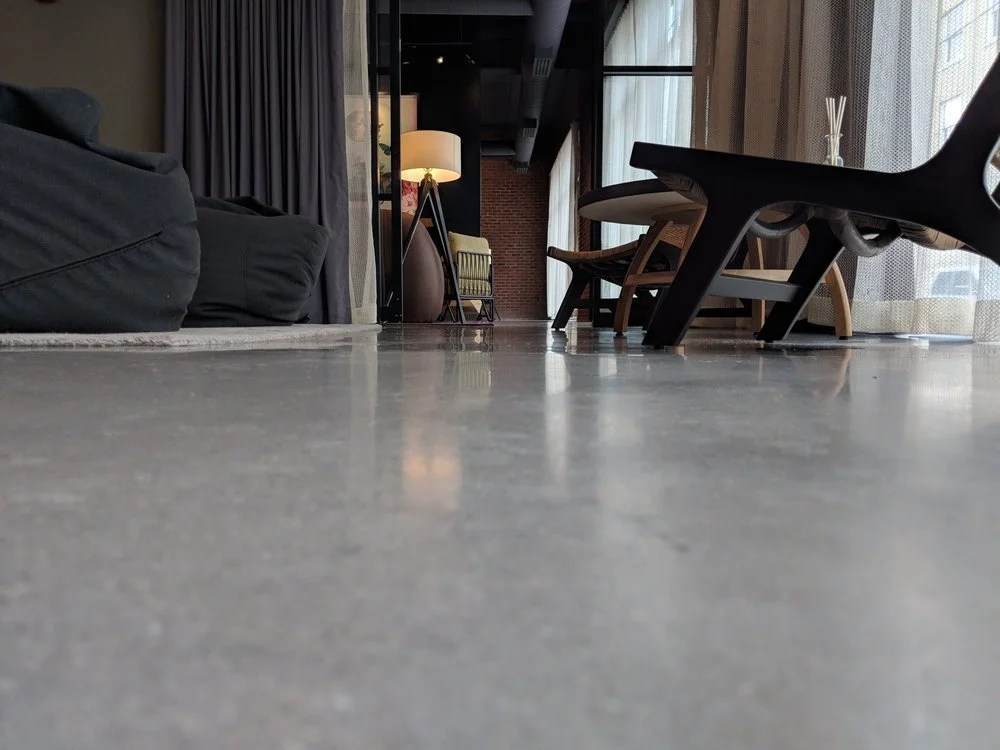
Homes, clinics, studios, and offices all share one problem: dirt tracks in and settle fast. Polished concrete reduces that burden because grinding and densifying tighten the slab’s surface, lowering dust release and limiting residue build-up. Maintenance becomes closer to basic hygiene than heavy scrubbing: remove abrasive grit, use mild solutions, and dry the surface evenly. With that routine, shine stays stable, and indoor air feels cleaner.
Surface Density Makes Cleaning Faster
During professional finishing, densifiers bond inside the slab and reduce open pores, which limits fine particulate shedding. People comparing concrete polishing melbourne often focus on appearance, yet the bigger win is practicality: fewer dusty films on skirting boards and less gritty haze underfoot. A tighter surface lets marks lift with gentle wiping, so cleaning time drops without harsh chemicals.
Grit Control Prevents Most Wear
Grit behaves like microabrasive particles under shoes, prams, and chair feet. Entry mats and a quick dust mop cut that friction before it dulls the finish. Microfibre captures fine debris rather than dragging it across the floor. Regular removal also reduces airborne particles stirred by walking, which supports comfort for people prone to sneezing or irritated eyes. Small habits near doorways prevent avoidable polishing later. For wheeled equipment, felt pads on legs and soft casters lower scraping during turns. In care settings, that means less particulate lift, which can ease breathing for sensitive lungs too.
Neutral Products Protect the Finish
Strong detergents can leave a sticky film that attracts soil, while acids can etch the surface and change how light reflects. A pH-neutral cleaner, diluted exactly to label directions, removes skin oils and tracked grime without stripping the sheen. Warm water handles light mess, and a neutral solution manages heavier build-up. Abrasive powders and aggressive degreasers belong in occasional, targeted use, not daily care.
Simple Routine, Minimal Steps
Daily pass
Dry dusting in busy lanes lifts grit before it grinds into the surface. One steady run usually suits homes, while high-traffic sites may repeat around peak periods. A wide microfibre head, moved in overlapping passes, keeps corners clear and prevents fine particles from reaching adjacent rooms during shifts.
Weekly refresh
A damp microfibre mop, paired with a neutral cleaner, removes film and footprints. Keeping the mop well-wrung prevents puddles that dry unevenly.
Spills Do Not Need Drama
Most spills respond to rapid blotting, followed by a light wipe and a clean-water rinse to prevent residue. Coloured liquids and fats need quicker attention because concrete can stain if fluids sit too long. A soft cloth protects the finish better than stiff brushes, which can leave micro-scratches that catch glare. After cleaning, drying the area helps keep the tone consistent.
Fewer Coatings Means Less Maintenance
Many floors rely on topical coatings that can peel, trap dirt at edges, or require stripping. A mechanically polished surface gains durability from the slab itself, so it often avoids frequent waxing cycles. Some spaces add a penetrating sealer or guard to improve stain resistance, yet routine care stays simple. Less coating work also reduces chemical exposure and lingering odours in occupied rooms.
The Finish Hides Dust Better Than Expected
A refined slab looks sleek, yet it does not hold fibres the way carpet does or trap grime in grout lines. Flat mop heads collect dust efficiently, and edge vacuuming stays quick. For allergy-aware households, fewer trapped particles can mean less irritation during cleaning. Keeping entry grit low helps maintain clarity, so the floor reads as clean even between scheduled mops.
Long-Term Care Is Predictable
High-traffic paths may lose some shine over time, especially in retail or reception areas. Periodic burnishing, or a professional refresh polish, restores gloss without replacing the floor. Protective treatments can be reapplied based on footfall, pets, and entrance exposure. Planning those touch-ups is simpler than dealing with cracked tiles, lifted vinyl, or torn carpet that can create trip risks and dust traps.
Conclusion
Polished concrete stays easy because its finish is integrated into the slab rather than sitting as a fragile layer. Daily grit control, mild cleaning chemistry, and quick spill response cover most needs while supporting cleaner indoor air. Simple tools, entry mats and microfibre heads reduce abrasion and keep sheen even. With occasional scheduled refresh work, the surface remains hygienic, stable, and practical for busy spaces.